Small and medium-sized enterprises must stay agile to survive and thrive. Gone are the days when long planning cycles and rigid processes could support sustainable business growth. Modern businesses are turning to Agile to drive faster decision-making, improve responsiveness, and deliver real value to their customers.
Agile is not just a method; it is a mindset. It brings structure and flexibility together, helping organisations become more efficient, adaptive, and customer-focused. Whether you are launching a new product, digitising operations, or streamlining internal workflows, Agile can help you achieve better outcomes, faster.
What Is Agile Business Analysis?
Agile Business Analysis refers to the ongoing evaluation of business needs, goals, and solutions using Agile principles. Unlike traditional analysis where all requirements are gathered upfront, Agile focuses on incremental delivery, allowing businesses to learn, iterate, and adapt throughout the process.
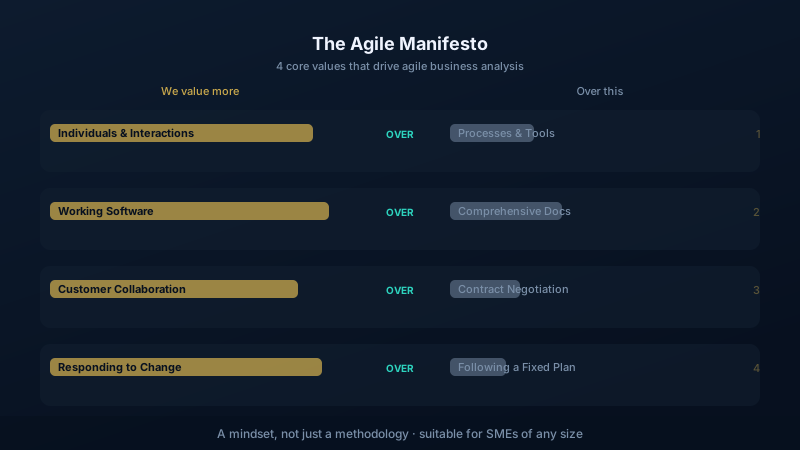
Agile is guided by the Agile Manifesto, which values:
- Individuals and interactions over processes and tools
- Working solutions over excessive documentation
- Customer collaboration over contract negotiation
- Responding to change over following a fixed plan
This approach enables businesses to focus on value and customer satisfaction rather than perfection on paper.
Why It Matters for SMEs
Many businesses face constraints like limited budgets, smaller teams, and rapidly changing customer expectations. Adopting Agile can help them:
- Accelerate time to market for new products or services
- Reduce project risk by delivering in small, testable increments
- Improve stakeholder engagement through regular collaboration
- Stay aligned with customer needs via continuous feedback
- Scale efficiently by improving internal workflows and prioritisation
By introducing Agile, businesses can transition from reactive firefighting to proactive planning, which is essential in today's digital-first economy.
The Role of an Agile Business Analyst
An Agile Business Analyst serves as the link between the business and the development or project team. Rather than writing long requirements documents, the role is dynamic and involves:
- Identifying stakeholder needs and refining them into deliverable user stories
- Facilitating workshops and stand-ups to ensure team alignment
- Analysing feedback and adapting requirements as business conditions change
- Supporting product owners in backlog management and prioritisation
- Driving continuous improvement by identifying and removing process inefficiencies
Agile Tools for SMEs
Final Thoughts
Agile is for all organisations, irrespective of business size or domain.
Whether you are a five-person team or a growing enterprise, the Agile mindset, combined with the right analyst to guide the process, can fundamentally change how you deliver value.