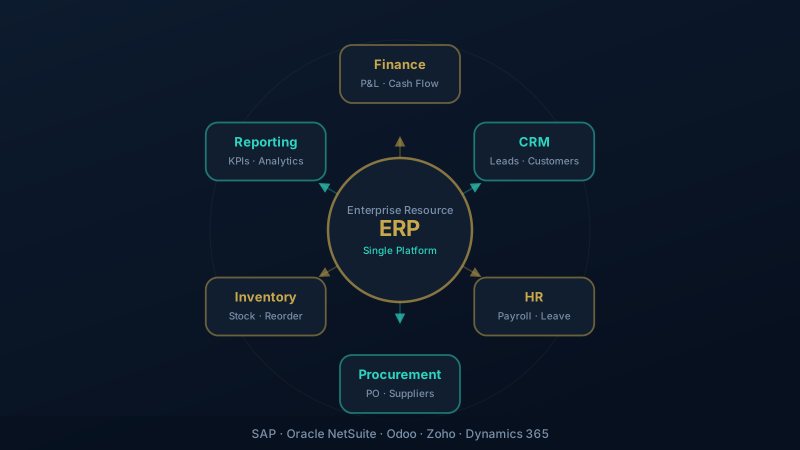
Running a business involves juggling multiple tasks: managing inventory, tracking sales, handling finances, and ensuring seamless communication across departments. As operations expand, reliance on spreadsheets and disconnected software often leads to inefficiencies and errors. This is where Enterprise Resource Planning (ERP) systems become essential.
What Is an ERP System?
An ERP system integrates and automates core business functions, including accounting, inventory management, customer relationship management, and human resources, into a single unified platform. By centralising data and streamlining workflows, it allows businesses to operate with greater efficiency, accuracy, and scalability. Instead of wasting time on manual processes, teams can focus on growth and make data-driven decisions that enhance overall performance.
Key Benefits
Process Automation
Routine tasks such as invoicing, payroll, and inventory tracking are handled seamlessly, reducing the risk of human error and improving operational speed. When a sale is made, inventory updates automatically, procurement gets notified if stock levels are low, and accounting records the revenue. Everything happens in sync without manual intervention.
Improved Financial Management
With an ERP system, financial data is consolidated into a single source, reducing discrepancies and ensuring compliance with tax regulations. Generating reports, tracking cash flow, and forecasting revenue become straightforward, allowing for better strategic planning and more informed resource allocation.
Scalability
What works for a five-person team may not be sufficient when the workforce doubles. ERP solutions are designed to scale alongside businesses, adapting to changing needs without disrupting daily operations. Cloud-based systems offer flexibility by allowing users to access critical business data from anywhere.
Customer Satisfaction
ERP enhances customer satisfaction by improving order fulfilment, reducing delays, and ensuring accurate communication. With integrated CRM functionality, businesses can track customer interactions, manage enquiries, and personalise services more effectively.
Risk Management and Compliance
Built-in compliance features help businesses adhere to industry standards, reduce legal risks, and maintain accurate documentation. Automated record-keeping and audit trails simplify reporting and keep you aligned with tax laws and financial policies.
Popular ERP Solutions for SMEs
Final Thoughts
Investing in an ERP system is not just about improving efficiency; it is about future-proofing your business. With automation, real-time insights, and seamless coordination between departments, enterprises can minimise errors, enhance customer satisfaction, and position themselves for long-term growth.
The sooner a business implements a well-suited ERP solution, the sooner it can move away from reactive problem-solving and focus on proactive strategy.