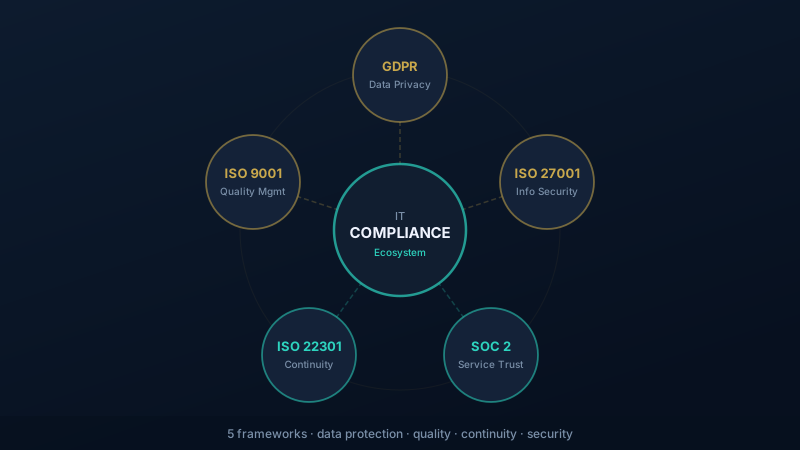
When you work in IT, whether as a Business Analyst or a Product Owner, you quickly realise that building a great product is not just about features and sprints. It is also about trust, security, and governance. That is where compliance comes in: it ensures your product or system operates within legal, security, and quality standards. It is not just a checklist; it is a framework for protecting customer data, ensuring service continuity, and maintaining organisational reputation.
If you have heard terms like GDPR, ISO 27001, or SOC 2 thrown around in meetings and wondered what they actually mean in practice, this article breaks them down and explains how to build them naturally into your projects.
What Is IT Compliance?
In simple terms, IT compliance means ensuring that your systems and processes follow the rules set out by regulators or industry standards. These rules are designed to protect sensitive data, keep systems secure, and maintain transparency in how information is managed.
For a BA or PO, this means more than just knowing the regulations exist. It means ensuring that compliance is considered from the start of a project, during requirements gathering, process mapping, and solution design. It is about building compliance into the way your product works, rather than treating it as an afterthought.
The Key Frameworks
GDPR: General Data Protection Regulation
GDPR affects almost every business that deals with personal data in the EU. It is all about protecting people's privacy, ensuring you only collect the data you need, keep it safe, and use it transparently. For example, if your platform collects customer emails, GDPR requires you to explain how you will use that data and give people a choice to opt out.
For a BA or PO, this means thinking about data retention, access control, and user consent during project planning, not just at go-live.
ISO 9001: Quality Management
This standard focuses on consistent quality and continuous improvement. It encourages businesses to define clear processes, monitor performance, and make decisions based on data. You can support ISO 9001 by documenting clear workflows, creating measurable acceptance criteria, and helping teams analyse what is working and what is not in every sprint or release.
ISO 27001: Information Security
ISO 27001 is about protecting information. It helps organisations put in place controls that keep data safe from breaches, misuse, or loss. From a product perspective, this means working closely with IT security teams to ensure system access, encryption, and data handling processes are defined and tested before release.
ISO 22301: Business Continuity
This framework prepares organisations for unexpected disruptions such as cyberattacks, system outages, or natural disasters. For a BA or PO, that means including resilience and recovery planning in your requirements, for example making sure there is a backup server or a data recovery plan in case of downtime.
SOC 2: Service Organisation Control
SOC 2 focuses on how service providers manage data security, privacy, and availability. If you are delivering a SaaS product or any customer-facing system, SOC 2 helps demonstrate that your business is trustworthy and secure, something your customers absolutely care about.
Why Compliance Matters
Compliance is not just about avoiding penalties or passing audits. It is about building trust. When your organisation takes data protection and security seriously, customers feel safe sharing their information and partners are more likely to do business with you.
Compliance also drives good habits inside the organisation. It pushes teams to document their work, review risks, and improve continuously. Over time, these habits turn into a culture of accountability and quality.
How to Approach It: Step by Step
- Know your data. Map out what data your system handles, where it comes from, where it goes, and who can access it.
- Collaborate early. Involve legal, security, and data protection teams from the start, not at the end of a project.
- Document everything. Keep a clear record of decisions, workflows, and changes. Documentation helps during audits and makes handovers easier.
- Assign clear responsibilities. Use a RACI matrix to clarify who is responsible, accountable, consulted, and informed across teams.
- Monitor and improve continuously. Compliance is not a one-off task. Regular reviews and feedback loops ensure your systems remain aligned with new requirements.
Useful Tools
Final Thoughts
For Business Analysts and Product Owners, compliance is no longer just a back-office concern. It is part of delivering value. Every new system, feature, or workflow you design should consider how data is handled, how processes are controlled, and how risks are managed.
When compliance becomes part of your daily thinking, it stops being a burden and becomes a strength: one that builds trust, drives quality, and sets your organisation apart.