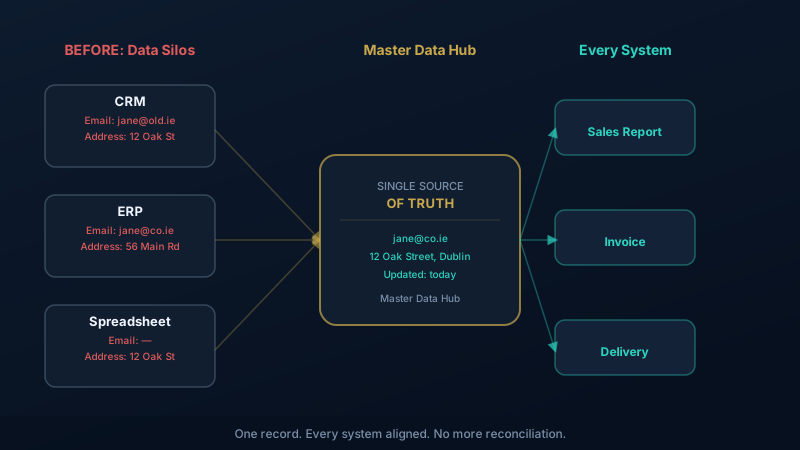
Every business runs on data. But when the same information is stored in different places, it is only a matter of time before things go wrong. A customer's email might be updated in the CRM but not in the invoicing system. Your inventory spreadsheet might say you have 100 units while the ERP platform says 85. When these mismatches happen, teams waste hours reconciling reports or, worse, make decisions based on incorrect data.
This is the problem that a Single Source of Truth solves. In simple terms, master data means there is one definitive version of data that the whole organisation can rely on. Every system, report, and decision points back to that single, consistent set of information.
Why Data Silos Cause Confusion
Most small and medium enterprises grow their tech stack organically. They start with accounting software, then add a CRM, later an inventory tool, and perhaps rely on spreadsheets for reporting. Each system does its job, but they rarely talk to each other. Over time you end up with data silos: isolated pockets of information that contradict each other.
A simple example:
- A customer changes their billing address.
- The sales team updates the CRM.
- The accounts team does not get the update and sends the invoice to the old address.
- The delivery team, working off a separate system, sends the order somewhere else entirely.
The result: a frustrated customer, delayed payment, and extra manual work for everyone involved.
How Businesses Solve This
The solution is usually a combination of data integration and master data management (MDM). Instead of each system holding its own version of the truth, they all connect to a single central source. This could be an ERP system, a data warehouse, or a dedicated master data hub.
- ERP systems like Odoo, Zoho One, or SAP Business One combine finance, inventory, CRM, and operations into a single platform so all modules share the same data.
- Integration platforms like Zapier and Make can connect multiple tools so that updates flow automatically between them.
- MDM tools like Informatica, Talend, or Microsoft Master Data Services allow businesses to define a "golden record" for each customer, product, or supplier.
Real-World Use Cases
Retail
A growing online store sells across Shopify, Amazon, and a physical shop. Without a single source of truth, stock levels vary between platforms, leading to overselling. By consolidating all stock data into one ERP, the business always knows its real inventory count.
Professional Services
A consultancy tracks projects in Asana, invoices in Xero, and client details in HubSpot. Each system holds overlapping but inconsistent client data. By integrating through a single source, they avoid duplicate entries and client confusion.
Manufacturing
A small factory manages production planning in Excel, sales in a CRM, and procurement in a separate system. This makes forecasting demand very difficult. By moving to a single ERP platform, sales forecasts feed directly into production schedules and supplier orders.
Why It Matters
When data is scattered, trust in reports drops. Teams start relying on their own spreadsheets, which makes the problem worse. By creating a single source of truth, businesses benefit from:
- Accurate reporting — everyone works from the same numbers.
- Faster decisions — no need to cross-check between systems.
- Improved collaboration — sales, finance, and operations all stay aligned.
- Scalability — processes stay efficient as the business grows.
Final Thoughts
At its core, a single source of truth is about giving your business a reliable foundation. Once the basics are in place, you can build more advanced capabilities like predictive analytics, automation, and AI. But it all starts with clean, consistent data.