As a Product Owner or Business Analyst, one of the most important responsibilities you carry is deciding what gets built next. Sounds simple, but anyone who has worked with competing stakeholders, tight deadlines, and limited resources knows how complex prioritization can become.
A backlog full of ideas, requests, and "urgent" demands can easily become overwhelming. Without a clear strategy, teams risk building features that look good on paper but do not deliver real value to customers or the business.
The MoSCoW Method
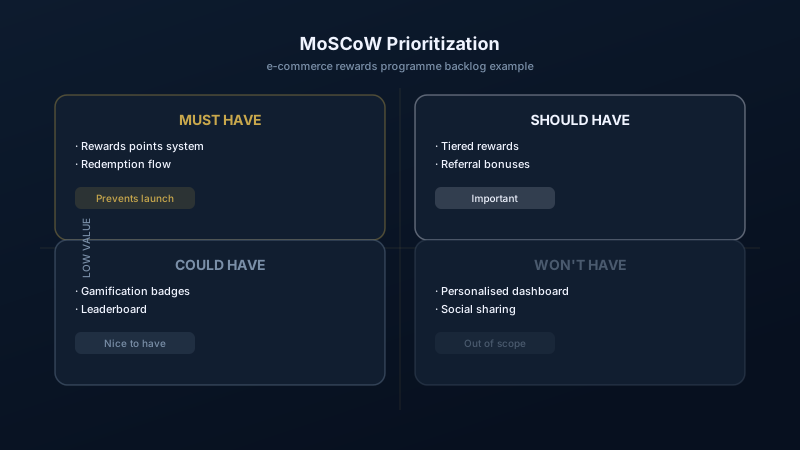
One of the most effective frameworks I recommend is the MoSCoW Method. It breaks backlog items into four clear categories:
- Must Have — core features without which the product cannot function
- Should Have — important, but not vital for the immediate release
- Could Have — nice-to-have features that enhance experience but can wait
- Won't Have (this time) — agreed items that will not be included in the current scope
A Real Example
I once worked with a client in e-commerce who wanted to launch a new customer rewards programme. Their initial backlog included reward tiers, gamification badges, referral bonuses, and personalised dashboards. Exciting ideas, but building everything at once would have delayed the release by months.
Using MoSCoW, we agreed to prioritise Must Haves: a basic rewards points system and a simple redemption flow. This allowed us to launch early, gather real customer feedback, and then build Should Haves like tiered rewards and referral bonuses in the next iteration. The result was faster time to market and higher customer engagement without overloading the development team.
The Value vs Effort Matrix
Another useful tool is the Value vs Effort Matrix. By plotting backlog items based on their business value and the effort required to build them, you quickly see which features deliver the highest impact with the least investment.
This approach is especially effective in SMEs where resources are often limited. Instead of getting stuck on complex, resource-heavy projects, teams can identify quick wins that build momentum and demonstrate value early to stakeholders.
Final Thoughts
Great Product Owners are not just order-takers; they are value maximisers. By applying frameworks like MoSCoW and Value vs Effort, you create alignment between business goals and customer needs while helping your teams deliver what matters most.
The key is not just choosing a framework, but facilitating the conversations that help stakeholders agree on priorities. That is where the real leadership of a Product Owner shines.